California’s 2026 Legislative Session: Clean Energy Bills You May Have Missed
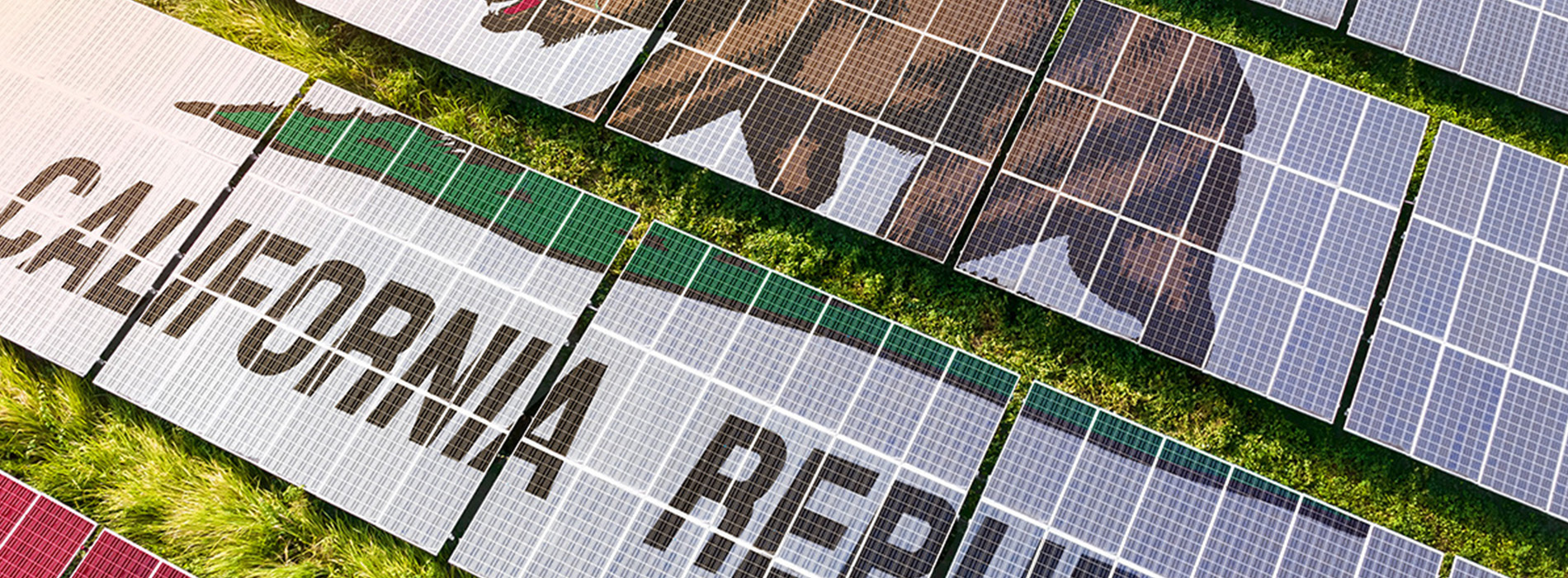
California’s bill to legalize plug-in solar kits on balconies and in backyards grabbed headlines this summer. But it was just one of several clean energy and decarbonization measures to emerge from the state’s 2025–26 legislative session.
With the session now complete and Gov. Gavin Newsom’s Sept. 30 deadline to act on legislation behind us, the final picture is coming into focus. New laws covering everything from home energy upgrades to EV charging and energy costs could have implications for California consumers, businesses and clean energy programs.
Here’s a look at some of the lower-profile clean energy bills that passed the Legislature, where they landed and what they could mean.
Home energy upgrades made easier
Senator Scott Wiener authored two bills aimed at reducing barriers to residential decarbonization. Senate Bill (SB) 222 streamlines permitting for residential heat pumps, limits permitting costs and prevents homeowners associations and common-interest developments from prohibiting or restricting their installation. The bill also phases in asynchronous and automated permitting options intended to further speed approval of qualifying heat pump installations. (Signed into law)
You may have already read about Senator Wiener’s SB 868 that would make it easier for Californians to use small, portable “balcony” solar panels that plug into a standard 120-volt outlet. Qualifying systems would be exempt from conventional utility interconnection requirements and fees, subject to safety and notification requirements. The approach could give renters, condominium owners and others without access to rooftop solar another way to offset a portion of household electricity use. (Signed into law)
Less noticed was Assembly Bill (AB) 1738 by Assemblymember Juan Carrillo, which addresses inspection delays for certain home energy upgrades. It requires local jurisdictions to offer remote inspections by 2028 for solar panels, EV charging, electrical panels, heat pumps, re-roofing and other minor projects. Remote inspections could reduce scheduling delays and project costs and provide a model for streamlining other types of building inspections more broadly. (Signed into law)
Faster, more predictable EV charging deployment
SB 1283, by Senator Angelique Ashby, aims to streamline permitting and other local approvals by extending existing ministerial approval requirements to EV charging stations that include canopies or on-site energy storage. It also directs the Governor’s Office of Business and Economic Development (GO-Biz) to create a standardized form for EV charging projects. (Signed into law)
AB 1820, by Assemblymember Pilar Schiavo, caps permit fees for Level 2 EV charging installations at new and existing multiunit housing developments. Cities and counties may charge higher fees if they document that the additional costs are reasonable and necessary. The law is intended to make permitting costs more predictable while allowing flexibility for more complex projects. (Signed into law)
New approaches to solar, storage and energy costs
SB 905, by Senator Josh Becker, focuses on longer-term electricity affordability. It directs the California Public Utilities Commission (CPUC) to consider lower utility returns on certain low-risk investments, establish reporting on the use of distribution infrastructure and examine alternative financing for grid investments. Together, the provisions could make better use of existing infrastructure and reduce some of the rate impacts of future grid spending. (Signed into law)
However, the governor vetoed AB 1813, by Assemblymember Christopher Ward, which would have required the CPUC to revise and expand the requirements for community solar and storage programs in the state. It would have allowed renters, low-income households and others who cannot install their own solar to subscribe to local solar and storage projects and receive bill credits based on the energy generated.
Proposals that could have slowed progress
Not every Legislative proposal would have moved California’s transportation electrification and decarbonization efforts forward. Consider these bills that did not advance:
SB 739, by Senator Jesse Arreguín, would have delayed certain decarbonization requirements for California’s Clean Miles Standard, as well as the forthcoming Rideshare Incentives for Driving Electric (RIDE) program, which provides incentives for high-volume rideshare drivers to use electric vehicles.
SB 1035, by Senator Tony Strickland, would have suspended California’s Low Carbon Fuel Standard for one year. Revenue associated with the program supports transportation, electrification and other emissions-reduction initiatives.
Finally, AB 2748, by Assemblymember Sharon Quirk-Silva, would have exempted certain new affordable housing developments from EV charging-readiness requirements designed to accommodate future EV charging.
Turning policy into progress
CSE’s experience designing and administering major clean energy and transportation programs — including the California Energy Commission’s California Electric Vehicle Infrastructure Program (CALeVIP), the California Public Utilities Commission’s Solar on Multifamily Affordable Housing (SOMAH) Program, the Equitable Building Decarbonization Program in California’s Central Region and the Self-Generation Incentive Program in the San Diego Gas & Electric territory — provides a firsthand view of what it takes to turn policy into successful projects. Permitting, inspections and other requirements can affect how efficiently projects move from approval to installation. Greater consistency can help reduce uncertainty for residents, contractors, site hosts and developers.
As California continues advancing clean transportation, building electrification and distributed energy policies, effective implementation will be just as important as the legislation itself. CSE will continue applying its program design, administration and implementation expertise to help translate decarbonization policy into real-world projects, broader participation and measurable results.
Rocky Fernandez
Senior Director of Policy
Rocky Fernandez brings two decades of organizing and policy experience to the Center for Sustainable Energy, with a focus on clean energy and transportation. Prior to joining CSE, he worked for 13+ years for the California Legislature and held roles with nonprofits Environmental Entrepreneurs (E2)…
Read more by Rocky Fernandez