
Energy Storage: How Batteries Support Homes, Businesses and the Electric Grid
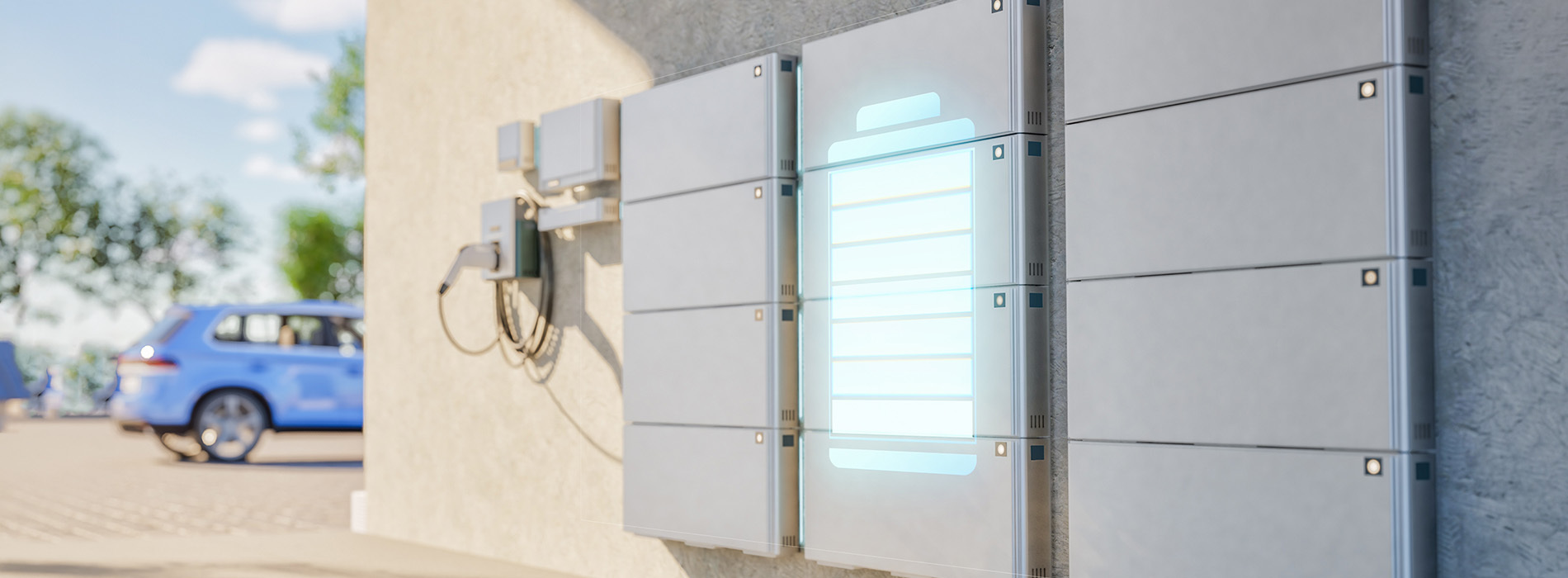
Battery energy storage is becoming an increasingly important part of the U.S. energy system. Simply put, storage allows electricity generated at one time to be saved and used later. That can mean storing rooftop solar energy for use after sunset, providing backup power during an outage or helping utilities balance electricity supply and demand across the grid.
The Center for Sustainable Energy (CSE), a national nonprofit that designs and administers clean energy and energy storage incentive programs, answers some frequently asked questions about energy storage and its role in the transition to a cleaner, more resilient electric system.
Key Energy Storage Facts
- Battery energy storage captures electricity and releases it when it is needed. This flexibility can help balance electricity supply and demand, reduce stress on the electric grid and help integrate renewable resources such as solar and wind into the power grid.
- Battery storage is growing rapidly in the U.S. Utility-scale battery capacity increased at an average annual rate of 70% over the past three years, reaching nearly 52 gigawatts (GW) by June 2026. Another 14 GW is planned to come online during the second half of 2026 (U.S. Energy Information Administration, August 2026).
- Residential battery storage is also expanding rapidly in the U.S. The residential market installed a record 2.7 GW of battery storage in 2025, up 92% from 2024 (Wood Mackenzie, March 2026).
- Energy storage is not limited to batteries. Technologies include pumped-storage hydropower, compressed-air storage, flywheels, thermal storage and other systems.
- Pumped storage hydropower remains the largest established form of grid energy storage in the U.S., with about 22 GW of generating capacity and approximately 550 gigawatt-hours of stored energy (U.S. Department of Energy, August 2026).
- Lithium-ion batteries are currently the most common battery technology used with solar installations and in many newer grid-scale storage projects. Other chemistries, including flow, sodium, lead-acid and zinc, are also being developed or deployed for different applications.
Frequently Asked Questions
Q: What is energy storage?
Energy storage allows electricity or another form of energy to be captured and used later.
A battery, for example, charges by taking electricity from the grid or an on-site energy source such as solar panels and converting it into stored chemical energy. When electricity is needed later, the process is reversed and the battery discharges electricity for use by a home, business or the electric grid.
Storage helps solve one of electricity's fundamental challenges: electricity generally must be produced at roughly the same time it is consumed. Storage provides greater flexibility by separating when energy is produced from when it is used.
Q: What are the benefits of energy storage?
The benefits depend on where a storage system is installed and how it is operated. Storage can:
- Provide backup power. Properly designed systems can keep selected appliances, equipment, or critical facilities operating during a grid outage.
- Make greater use of solar and wind energy. Batteries can store excess solar and wind power produced during the day and make it available in the evening when demand spikes.
- Lower electricity bills. Where electricity rates vary by time of day, storage can help customers reduce utility costs by charging when electricity is less expensive and using stored energy when rates are higher.
- Support the electric grid. Storage can rapidly charge or discharge to help balance supply and demand, manage peak loads and maintain reliable electricity service.
- Storage consumes some energy in the process of charging and discharging, so it is not 100% efficient. Its value comes from making electricity available at a more useful time or place.
Q: How does battery storage work with solar panels?
Solar panels often generate the most electricity during the middle of the day. A home or business may not use all that electricity when it is produced.
Without storage, some or all solar electricity generally flows to the electric grid, subject to the local utility's rules and compensation structure. A battery allows some of that electricity to be stored on site.
Later, when solar production falls or stops, the battery can discharge. This may reduce the amount of electricity the customer needs to purchase from the grid. Where electricity rates are higher later in the day, using stored solar energy can also help lower utility bills.
Solar and battery storage can also provide backup electricity during outages, but only when the system is specifically designed and configured for backup operation. The amount of backup power available depends on battery size, electrical loads, system configuration and how long the outage lasts.
Q: Does a battery have to be paired with solar?
No. A standalone battery can charge from the electric grid and discharge later. For example, customers with time-of-use electricity rates may charge a battery during lower-cost periods and use that stored electricity when rates are higher.
At the grid scale, batteries frequently charge when electricity supplies are abundant or lower-cost and discharge when demand rises.
Pairing batteries with solar, however, can increase cost-effectiveness of the system since the energy is generated on-site and at no cost. It also offers additional opportunities to store renewable electricity and increase the amount of on-site solar generation that can be used locally.
Q: What do kilowatts and kilowatt-hours mean for batteries?
Two measurements are especially important when comparing battery systems:
- Kilowatt-hours (kWh) measure energy. This is the total amount of electricity the battery can store.
- Kilowatts (kW) measure power. This is the maximum rate at which a battery can supply electricity at a given moment.
Think of the difference as similar to a water tank. The kWh capacity is comparable to the amount of water the tank can hold, while the kW rating is comparable to how quickly water can flow out.
A battery with high energy capacity but relatively low power may operate equipment for a long time but may not be able to run many high-power appliances simultaneously. Both measurements matter when selecting a system.
Q: How long can a battery provide power?
It depends on the battery's usable energy capacity and what it is powering. A battery intended to keep a refrigerator, lights, internet equipment and a few outlets operating will last much longer than the same battery powering central air conditioning, electric water heating, cooking equipment and other large loads.
For backup applications, homeowners and businesses should first identify which loads are essential and then work with a qualified installer to size a system accordingly.
Storage duration is also important at the grid scale. Some batteries are designed to discharge for only a few hours, while long-duration energy storage technologies may provide electricity for 10 hours, multiple days, or even longer. The U.S. Department of Energy classifies storage technologies partly by how long they can operate before needing to recharge. (U.S. Department of Energy, July 2023)
Q: How much does a home battery cost?
Costs vary depending on battery capacity, equipment, installation complexity, electrical upgrades, location and whether the battery is installed as a standalone system or with a new or existing solar system.
As a general market indicator, EnergySage estimated in July 2026 that a typical 13.5-kWh residential battery installation cost about $15,650 before incentives (EnergySage, July 2026). That’s nearly half the 28 kWh an average household uses each day. (EIA, 2025) A battery of this size can power a typical side-mount refrigerator-freezer consuming 1.9 kWh daily for about seven days. (EIA, 2023)
Homeowners should compare several proposals and look beyond the initial price. Important considerations include usable battery capacity, power output, warranty terms, expected battery life, backup capabilities, installation costs and compatibility with an existing or planned solar system.
Q: Are incentives available for battery storage?
The federal Residential Clean Energy Credit, which provided a 30% tax credit for qualifying residential battery systems, ended Dec. 31, 2025 (IRS, July 2026).
Some states, utilities, municipalities and other organizations offer battery incentives, rebates, financing or programs that compensate customers for allowing utilities to use enrolled batteries to support the grid.
Because programs vary significantly by location, consumers should check their state energy office, electric utility and the Database of State Incentives for Renewables & Efficiency (DSIRE) for current offerings.
Federal clean electricity investment incentives remain available for certain qualifying commercial and larger energy storage projects, as well as residential projects owned by a third party, subject to federal eligibility requirements.
Q: What types of energy storage are available?
Several technologies can store energy:
- Electrochemical batteries – Widely used in homes, businesses, electric vehicles and grid-scale projects because they can respond quickly and store significant amounts of energy in a compact space.
- Flow and other advanced batteries – Designed for applications that may require longer operating durations or frequent cycling.
- Pumped-storage hydropower – Pumps water to a higher reservoir when electricity is available and releases it through turbines later to generate electricity.
- Thermal energy storage – Stores energy as heat or cold for later use, including systems using water, ice or molten salt.
- Compressed-air and mechanical storage – Store energy through physical processes such as compressed air or rotating flywheels.
- Long-duration and emerging storage technologies – Technologies under development can store energy for much longer periods, potentially helping the grid manage extended periods of high demand or low renewable generation.
Q: Is battery energy storage safe?
Battery energy storage systems are designed with multiple safety features, including battery management systems that monitor operating conditions and can disconnect equipment when abnormal conditions occur.
As with other electrical equipment, improper installation, damaged equipment or misuse can create hazards. Improper installation can cause lithium-ion batteries to experience thermal runaway, a process in which excessive heat triggers chemical reactions that can lead to fire and potentially spread among battery cells.
National safety standards and building, electrical and fire codes address battery system design and installation. Important standards include UL 9540 for energy storage systems and NFPA 855 for stationary storage installations.
Consumers should choose properly certified equipment, use qualified and appropriately licensed installers, obtain required permits and follow local building and fire codes. Information about safe installations and safety tips can be found on the website Battery Energy Storage Basics (Safe Electricity.org, August 2026).
Q: What role will energy storage play in the future energy system?
Energy storage is becoming increasingly critical as renewable generation expands and electricity demand increases to power more buildings, vehicles and data centers.
At homes and businesses, storage can make on-site energy more flexible and improve resilience. At community and utility scales, it can help balance supply and demand and improve grid reliability. Longer-duration technologies may eventually provide energy across days or longer periods when electricity supplies are constrained.
The central benefit is simple: storage gives electricity a time dimension. Instead of requiring every kilowatt-hour to be consumed when it is generated, storage allows clean and lower-cost energy to be saved and delivered when it is most valuable.
That flexibility can help create an electric system that is cleaner, less expensive, more reliable, more resilient and better able to meet changing energy needs.