As Federal Support Declines, States Can Keep Energy Storage Growing
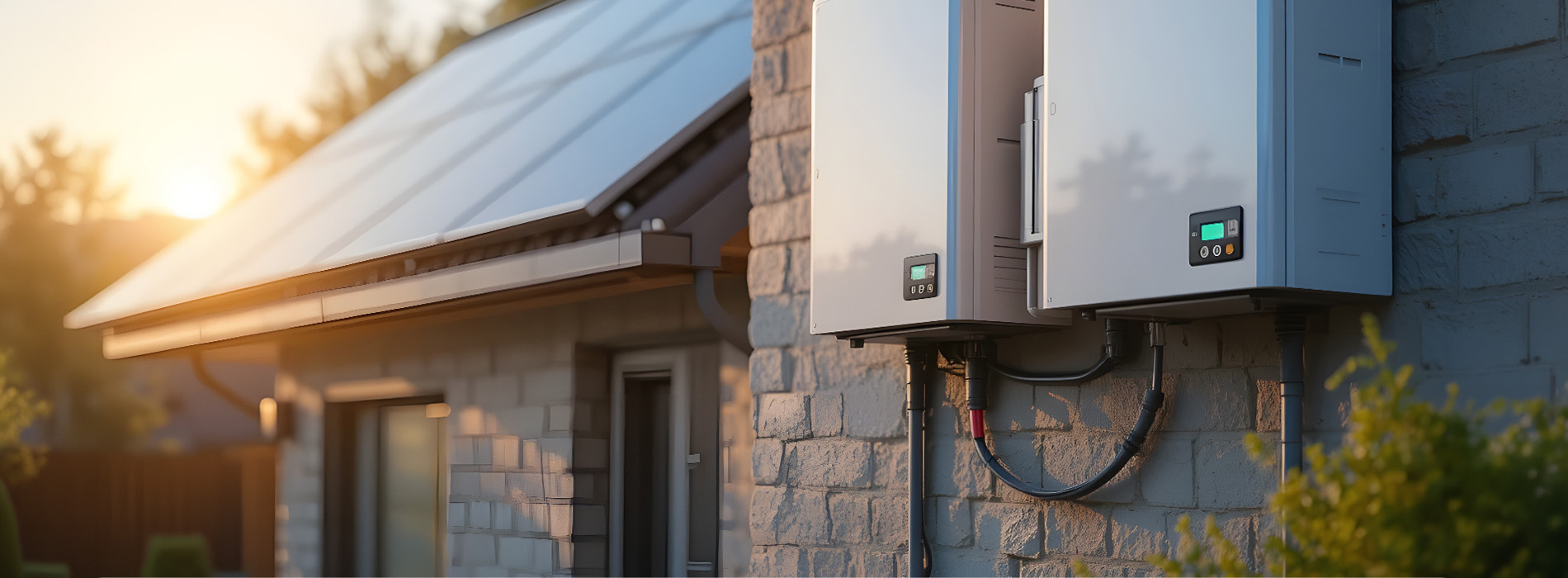
California is nearly a third of the way toward meeting its goal of installing 52,000 MW of battery energy storage by 2045. The goal is roughly 23 times the peak capacity of Diablo Canyon, California’s last operating nuclear power plant.
Battery storage supports grid reliability, provides backup power when the grid is strained or unavailable and enables greater use of renewable energy. But recent changes to federal tax incentives and the closure of California's largest energy storage incentive program could slow adoption, particularly for residential customers.
Battery energy storage is important because it:
- Captures solar, wind and other clean energy when it is abundant and delivers it when the grid needs it most.
- Keeps critical equipment running, including wells, medical devices, refrigerators and cell phones, during a grid outage.
- Helps reduce energy bills by allowing cheaper power bought during daylight hours to be used during more expensive peak evening hours.
- Reduces reliance on noisy, polluting diesel backup generators.
Federal policy raised the cost of residential energy storage
When the federal investment tax credit (ITC) on residential battery energy storage ended in December 2025, homeowners lost a credit worth 30% of system costs, making battery installations significantly more expensive.
Businesses and utilities, however, are still eligible for a 30% base ITC for energy storage through 2032, as are residential systems sold under third-party ownership models. Under third-party ownership, a company owns and operates the battery system, and the homeowner pays through a lease or service agreement, allowing the company to claim the federal tax credit and often pass some of the savings on to the customer.
New federal sourcing requirements create uncertainty
Federal policy changes created another challenge. With the enactment of the One Big Beautiful Bill Act of 2025, energy storage projects and manufacturing components were restricted from qualifying for federal tax credits if those projects received “material assistance” from a “Foreign Entity of Concern” (FEOC).
China, which dominates battery energy storage manufacturing, is considered an FEOC under the law. As a result, developers and contractors needed to quickly establish complex safe-harbor agreements to preserve ITC eligibility.
California’s energy storage efforts may stall
California has been a national leader in energy storage deployment for years. As of November 2025, the state has installed nearly 17,000 MW of battery storage, almost double the capacity of Texas, the next-largest market.
Most of that capacity, 82%, comes from large utility-scale projects. The rest is made up of what are called behind-the-meter systems installed in homes, businesses, schools and local government facilities. Nearly 30% of these behind-the-meter systems were installed with help from the state Self-Generation Incentive Program (SGIP), the largest distributed energy generation investment in the nation.
SGIP closed to new applications for general market customer sectors at the end of 2025, and funding for its remaining low-income budget category has since been fully subscribed.
5 recommendations for energy storage incentive programs
California's experience demonstrates that incentives can accelerate deployment of distributed storage systems that improve resilience and reduce energy costs. With federal support now limited, states may need to play a larger role in sustaining market growth. SGIP helped support nearly 30% of California's behind-the-meter storage installations, providing a clear example of how targeted incentives can expand adoption.
Center for Sustainable Energy offers lessons learned from administering SGIP in the San Diego Gas and Electric (SDG&E) service territory that can be applied in any state.
1. Offer an easy-to-navigate incentive application process
Energy storage incentive programs often require documentation from developers and installers to verify project eligibility. Participants may also need to commit to data reporting and battery discharge requirements over a defined period. States can simplify the process by creating developer-driven applications and partnering with utilities to verify documentation. Using categorical eligibility where appropriate can also streamline the process. For example, under SGIP's Equity and Equity Resiliency budgets, customers can qualify through established pathways such as participation in income-qualified programs or being in a disadvantaged, low-income or tribal community or a High Fire Threat District.
2. Offer advance incentive payments
Many contractors and project developers cannot afford to carry the upfront costs of installing an energy storage system and wait until the end of the process to collect the incentive. An optional advanced payment program gives developers access to a portion of the incentive upfront, opening the door for more contractors to participate and enabling more projects to move forward simultaneously.
3. Encourage participation in energy-saving programs
Demand response programs such as the California Emergency Load Reduction Program can save customers money on their utility bills while supporting the grid and helping prevent power outages. Installing an energy storage system also creates an opportunity to discuss home weatherization, electrification and panel upgrades that can further reduce energy use and costs. Customers may be unaware of available programs. Outreach and education can help them identify the options that best fit their needs.
4. Reduce permitting obstacles
Lengthy approval timelines and unclear regulatory requirements add cost and uncertainty to storage projects. The California Energy Storage Permitting Guidebook offers best practices and tools that can be applied by other states as well to help planning offices and permitting agencies process applications efficiently while maintaining system safety.
5. Allow time to educate customers and contractors
Most homeowners and business owners understand batteries but may not realize that today's systems can power an entire building. Incentive programs benefit from a six-month lead time to educate customers on the benefits of the technology and how it works and to engage contractors on the program’s eligibility rules. Releasing funds in phases, rather than all at once, also gives more customers and contractors an opportunity to participate while helping manage program demand and cash flow.
For homeowners, businesses and communities, energy storage offers more than backup power. It can lower energy costs, support a more reliable grid and enable greater use of clean energy.
As federal incentives recede, state programs can help ensure those benefits remain within reach for more customers.