
A Practical Guide to Improve Permitting for Battery Energy Storage Systems
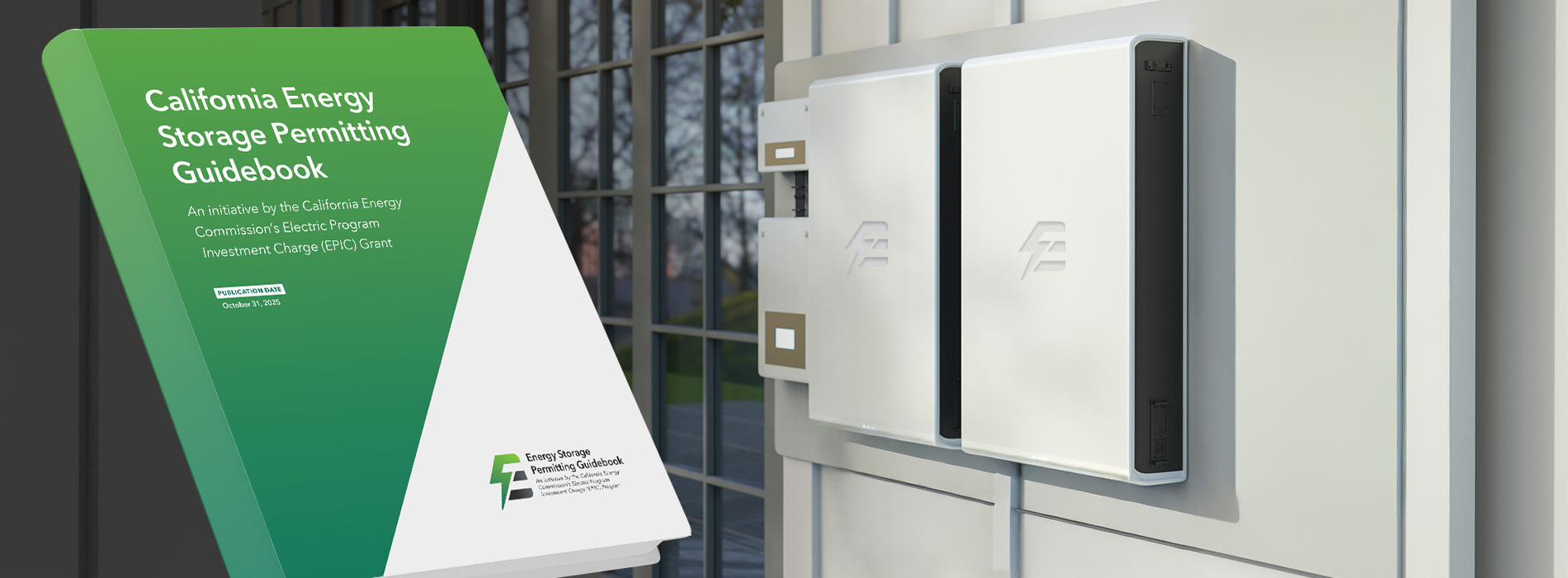
Across California, behind-the-meter batteries are being installed alongside rooftop solar to improve resilience and manage power costs. Yet permitting these customer-side energy storage systems remains a critical step that can slow deployment.
Energy storage projects have faced a patchwork of local requirements: different submittal checklists, code interpretations, fire-safety expectations, cross-department coordination requirements and permitting paperwork. The result has been delays, confusion and higher costs.
The California Energy Storage Permitting Guidebook aims to ease these challenges by distilling years of real-world permitting experience into clear best practices for authorities having jurisdiction (AHJs) and electrical installers. It focuses on what matters most: clear guidance on interpreting codes, transparent requirements, and digital tools that help jurisdictions process standard residential systems efficiently and safely.
The guidebook was developed by the Center for Sustainable Energy (CSE) with support from the California Energy Commission and input from a broad spectrum of stakeholders across the clean energy industry.
CSE’s analysis found that permitting bottlenecks often had less to do with technology and more to do with processes. The guidebook’s field-tested best practices offer a simple blueprint for streamlining without sacrificing safety.
Clarifying the code landscape
Energy storage permitting for residential battery systems crosses several code families: the California Residential Code, Electrical Code, Fire Code, and Building Energy Efficiency Standards. The guidebook breaks down how each applies, emphasizing UL 9540-listed equipment as a baseline for safety. It also reflects key updates in the 2025 code cycle that move fire-safety responsibility from local interpretation to manufacturer certification, reducing the burden on AHJs and installers alike.
Best practices from the field
The guidebook compiles lessons from permitting offices across California and provides practical steps that any jurisdiction can adopt. Among them:
- Publish clear checklists and example plan sets. Transparency up front cuts review time and resubmittals.
- Designate single points of contact. Communication improves when applicants and reviewers know who’s responsible for what.
- Leverage public dashboards. Tracking permits and inspections online helps manage workload and builds trust with the community.
- Engage with standards organizations. Direct training from UL Solutions or the National Fire Protection Association can demystify certification documents and improve plan review consistency.
Jurisdictions that have implemented these practices, like San Joaquin County’s fully online permitting platform and the City of Stockton’s permit center and inspection scheduler, report measurable improvements in turnaround time and satisfaction.
Integrating digital tools
The guidebook also provides step-by-step guidance for jurisdictions ready to move permitting processes online. Many California AHJs already use electronic submittal systems. The next step is automated plan review for standard residential projects. Several digital tools verify code compliance and generate permits in real time for eligible systems.
For local agencies, integrating digital tools means reducing manual workload while ensuring compliance. For contractors, it means predictable submittal requirements and faster approvals.
The value of consistency
The guidebook’s step-by-step approach—clarify, standardize, digitize—could be the model other states follow as distributed energy resources multiply. When local governments embrace these tools, permitting backlogs shrink, soft costs drop and homeowners enjoy shorter project timelines and more time benefiting from backup power.
California now has an energy storage permitting roadmap. The next step is for every jurisdiction to pick it up and run with it.
Access the guidebook and sign up for invitations to educational webinars at https://www.energystorageca.com/

Demetra Tzamaras
Senior Manager
Demetra (Dema) Tzamaras is a licensed civil engineer (CA C90123) with eight years of experience in consulting, project management, and clean energy program design. At CSE, Dema supports a variety of DER demonstration and evaluation projects and incentive programs. She manages a million-dollar…
Read more by Demetra Tzamaras