
The Electric Truck Market is Gaining Speed
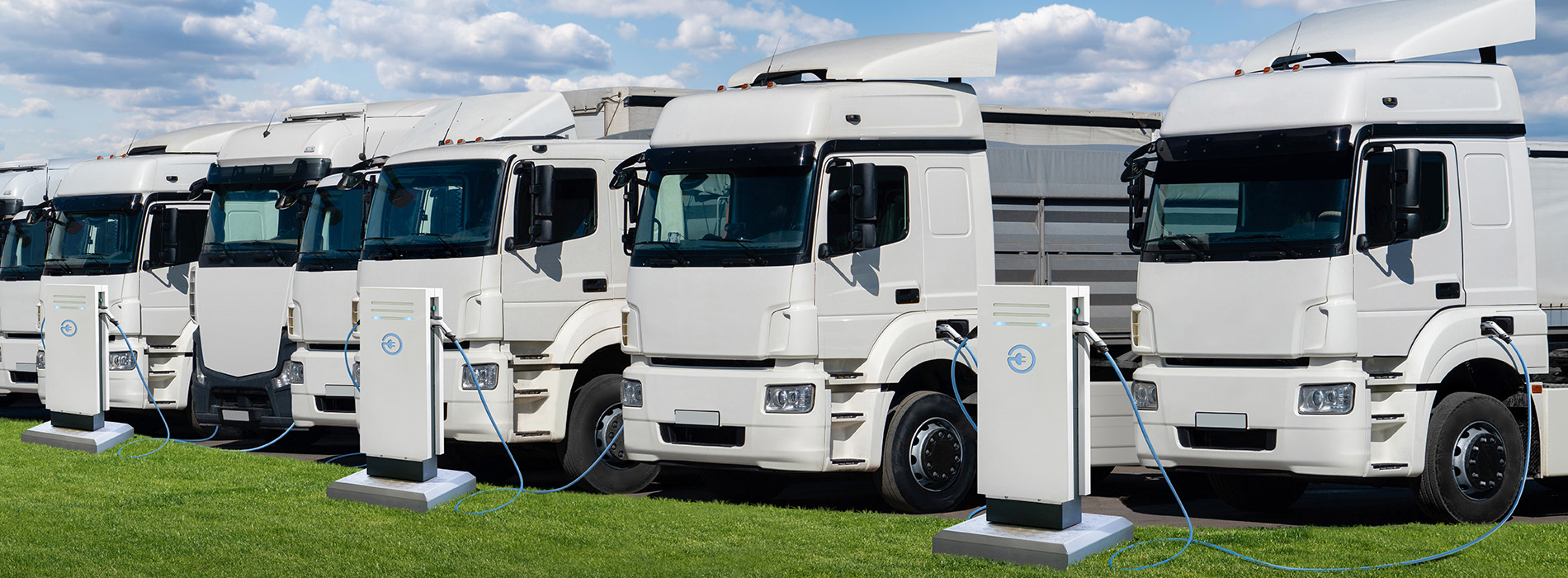
Most of the nation’s progress in transportation electrification so far has come from passenger cars and pickup trucks. But the vehicles that move the country’s freight—medium- and heavy-duty (MHD) trucks—remain almost entirely dependent on diesel.
Although they make up only about 5% of vehicles on U.S. roads, MHD vehicles generate disproportionate impacts on climate change and air pollution, producing roughly 20% of transportation-related greenhouse gas emissions, 17% of transportation-related particulate matter emissions, and 29% of transportation-related nitrogen oxide emissions.
For states and utilities, electrifying freight and delivery fleets is a major challenge, but also an opportunity to achieve climate goals and improve air quality near highways, ports and distribution centers.
Success will depend not just on vehicle deployment, but on coordinated infrastructure planning among state agencies, utilities, fleet operators and charging providers.
The electric MHD market is building momentum
The electric truck market is gaining speed. Manufacturers such as Freightliner, Volvo, Tesla, Rivian and BYD are committed to electrifying MHD vehicles, with dozens of models already in production. Large operators like Amazon, UPS and FedEx are rolling out thousands of electric delivery vans and regional freight movement trucks.
A recent demonstration of long-haul Class 8 trucks hosted by the North American Council for Freight Efficiency (NACFE) showed how electric trucks can meet the demands of freight operations today. Among the results:
- One battery electric truck completed 465 miles on a single charge.
- Another operated in a dual-shift configuration covering 3,676 miles over 18 days spending just 13% of its time charging.
- Another logged 875 miles in a single day using only public charging.
This demonstration and others offer real-world performance data for fleets, utilities and policymakers evaluating the readiness and scalability of going electric.
Private investment is also building critical MHD EV charging infrastructure. Companies such as Voltera and Penske-Hitachi are demonstrating scalable depot and corridor charging solutions that serve fleets of varying sizes.
Charging infrastructure is the challenge
While vehicle technology continues to advance, charging infrastructure remains the most significant barrier. Both high-power corridor charging for long-haul and urban depot charging for local and regional delivery are complex and capital-intensive.
Because a single high-power charger for a Class 7–8 truck can require up to a megawatt of capacity, fleet depots quickly can reach multi-megawatt demand levels when transitioning to electric trucks. Meeting this scale requires careful site planning and early coordination with utilities to assess substation needs, distribution-system upgrades and permitting timelines. Grid upgrades can take 18–24 months for typical projects and even longer when new substations are required, based on industry and utility estimates. That means infrastructure planning must begin well before fleets place vehicle orders.
Data-driven charging station siting using state fleet registration data, freight movement patterns and disadvantaged community mapping can help investments meet real operational demand and deliver environmental justice outcomes. Additionally, partnering with other MHD charging providers, like TeraWatt, Voltera and Greenlane, can supplement or fill the gap where charging capacity is needed.
6 key design strategies for states and utilities to expand MHD charging
Coordinate early and often.
State energy offices, transportation departments, utilities, fleet operators and air agencies should establish working groups that align incentives, permitting and power grid planning. Frameworks such as the National Zero-Emission Freight Corridor Strategy offer useful starting points for collaboration. Areas for alignment include how to advance the Megawatt Charging Standard (MCS), a high-power DC fast charging standard developed by the CharIN industry group specifically for MHD vehicles, and what state policies are needed to guide the market.
The Otay Mesa truck stop, California’s first public MHD DC Fast Charging site, is an example of a high-impact and collaborative charging project. Located at the busiest commercial border crossing with over 6 million vehicles per year, the chargers were funded by the California Electric Vehicle Infrastructure Project (CALeVIP) and the underlying infrastructure by a San Diego Gas & Electric program, Power Your Drive for Fleets.
Think beyond the vehicles.
Successful programs pair funding for vehicles and infrastructure. Rate design and make-ready incentives can lower upfront costs for fleet operators and support off-peak charging, helping utilities manage demand efficiently. Workforce development for electricians, maintenance personnel and grid planners will also be essential to meet growing needs for skilled labor.
Right size incentives.
Incentive programs should reflect current vehicle range and performance, as well as the upfront cost differential between electric and diesel vehicles. If a zero-emission Class 8 truck is significantly more expensive than a comparable diesel model, incentives should be calibrated to meaningfully close that gap. In terms of range, Class 8 trucks such as the Tesla Semi now offer up to 500 miles on a single charge, demonstrating that certain long-haul and high-utilization routes are already viable for electrification.
Target equity and health benefits.
Electrifying freight movement offers major public health benefits, particularly in communities near ports and warehouses where diesel emissions have long been concentrated. Programs should prioritize charging hubs and corridor projects in these areas.
Measure and share progress.
Public dashboards that track key metrics show progress to policymakers, industry partners and the public and help refine program design over time. CSE has developed dashboards for several EVI programs. The CALeVIP Rebate Statistics Dashboard features statewide mapping and detailed, filterable statistics on charger deployment. Similarly, the NJBPU Clean Fleet EV and EV Charging Program has a dedicated Incentive Statistics Dashboard that shows incentivized vehicles and charger details.
Prioritize reliability and interoperability.
Fleet operators depend on charging systems that work consistently and integrate seamlessly across sites, vendors and utility territories. States can strengthen program requirements by adopting interoperability standards and establishing uptime expectations, such as 97% or higher, that align with federal guidance. To assist entities with monitoring charger reliability, Center for Sustainable Energy (CSE) collects, manages and reports charger utilization data for various EVI programs using its Caret® EV Charging Knowledgebase platform. Knowledgebase securely aggregates, standardizes and analyzes anonymized data to understand how, when and where EV charging is actually being used.
CSE helps incentivize MHD adoption
CSE has 30 years of experience designing and administering transportation and clean energy programs across the United States. CSE helps partners plan, model and evaluate high-power charging networks and vehicle incentive programs so that public and private investments result in dependable, scalable charging networks that fleets can trust for daily operations.
Our work in the MHD space includes:
- Administering MOR-EV Trucks for Massachusetts, which has provided $6.5M+ in rebate vouchers to date for individual and fleet acquisitions and environmental justice communities.
- Managing the Voucher Help Center for New York’s Truck Voucher Incentive Program, which supports efforts by the New York State Energy Research and Development Authority (NYSERDA) to distribute $35M for Class 3-8 trucks and $18M for offroad vehicles.
- Administering Commonwealth Edison’s $85M Business & Public Sector EV Program for purchasing MHD EVs, buses and charging make-ready infrastructure.
MHD electrification represents a long-term opportunity to cut emissions and improve community health. The next phase of transportation electrification is to build the backbone of zero-emission freight hauling that will sustain clean, efficient logistics for decades to come.
This is Part 1 of a two-part series on medium- and heavy-duty vehicle electrification. This article examines why the industry is ready today, with commercially available vehicles, expanding high-power charging and real-world performance data. Part 2 will showcase a preliminary framework for long-haul truck and charging incentives, outlining how states can structure programs to support both vehicles and corridor infrastructure.
For help designing or administering a medium- and heavy-duty EV incentive program, contact CSE at consult@energycenter.org.

Vartan Badalian
Director
Vartan Badalian, Esq., is a legal, policy and industry expert with more than six years’ experience in corporate sustainability, electrification and transportation, leveraging his knowledge to help drive decarbonization. At CSE, he oversees electric vehicle (EV) programs in the eastern U.S.,…
Read more by Vartan Badalian