How to Raise the Bar for EV Charging Reliability
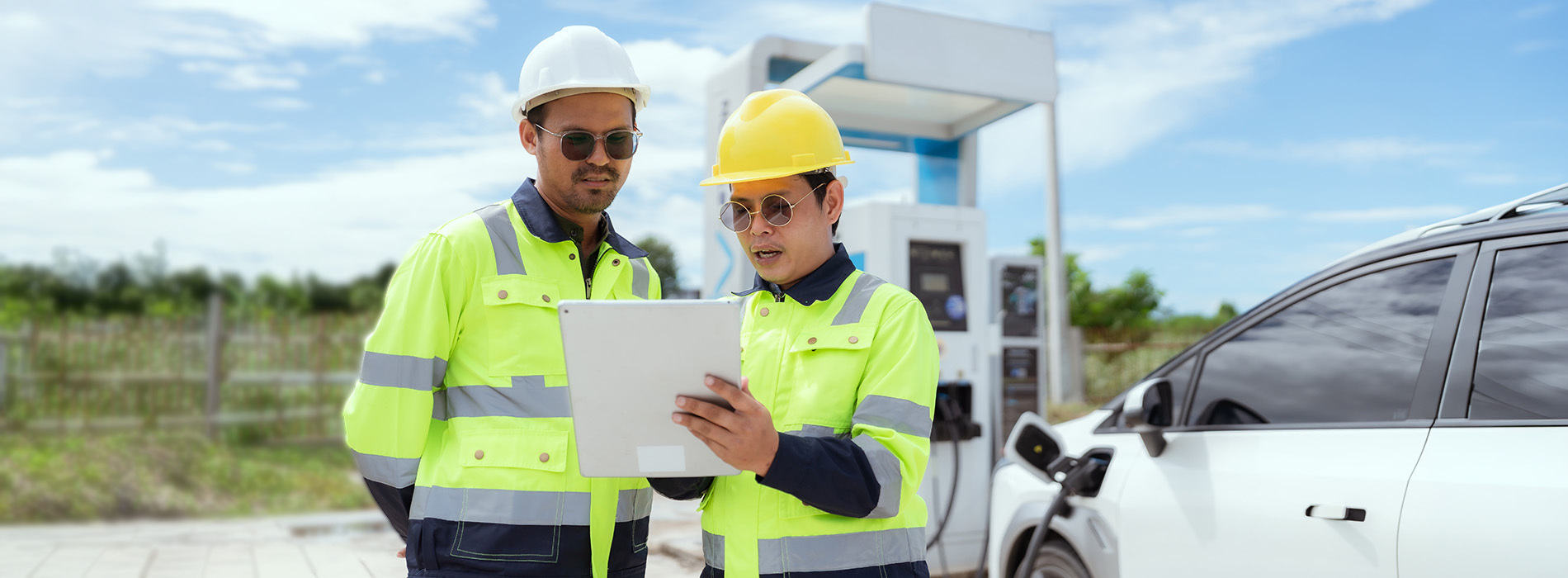
You check your charging app, drive your electric vehicle to a nearby available charger, plug in and … nothing. The charger does not work.
Many EV drivers have had this frustrating experience. It is more than an inconvenience. It is a consumer-confidence problem that must be addressed for EV adoption to continue growing.
That is why California and other states are creating reliability standards for EV charging networks, along with reporting requirements to make sure those standards are met.
Drawing on experience supporting the deployment of thousands of EV chargers across the U.S., the Center for Sustainable Energy (CSE) offers charger reliability recommendations that will improve the driver experience, strengthen public accountability and prepare the grid for future EV charging demand.
California was an early leader in EV charger reliability standards
California became one of the first states to adopt regulations aimed at improving the reliability of EV charging infrastructure. The rules, adopted by the California Energy Commission (CEC) in October 2025, took effect April 1, 2026. Three key requirements are:
- Meet uptime standards and report on reliability
Direct current fast chargers (DCFCs) that receive public incentive funds must operate at least 97% of the time. To demonstrate compliance, charging network providers must report hourly reliability data for each of their chargers.
- Report on charging inventory
Charging network providers for both DCFC and Level 2 EV infrastructure must report semiannually on charger locations, power levels, port counts and connector types. This information will help the state track the number, location and capacity of chargers across California.
- Share data with third-party software developers
Network providers must share data on charger availability, accessibility and other characteristics with software developers. This enables the development of tools, including mobile apps, that can help drivers find available, working chargers.
Federal regulations enacted in February 2023 governing funds awarded through the National Electric Vehicle Infrastructure Formula Program align with many of California’s requirements, including the 97% uptime standard and the third-party data sharing requirement. However, California rules go further by requiring more detailed data collection, including hourly charging session data.
More states are considering EVI reliability standards
Other states are advancing similar efforts.
New Jersey law requires state-funded EV infrastructure to meet many of the same requirements as California, while also allowing network providers to report interval data in addition to session data. Colorado, Florida and Maryland are exploring reliability standards but have not yet adopted formal regulations.
In Pennsylvania, utilities are helping raise expectations for charger performance. The state’s largest utility, PECO, requires incentive recipients under its EVsmart Charging Program to report key reliability and utilization data, including session and interval data. In Washington, regional utility provider Avista tracks reliability and utilization data from ratepayer-funded chargers and uses that information to develop load profiles that show variations in electricity demand.
How states and utilities can do more to ensure EV charger reliability
State agencies, utilities and other funding entities need chargers to be reliable, well utilized and accessible. To accomplish these goals, CSE offers three recommendations:
1. Enforce and revisit uptime standards
Reliability standards are only meaningful if they are enforced. States and utilities should set clear expectations for uptime and establish consequences for failing to meet them.
For example, the CEC will enforce its reliability regulations through grant and incentive agreements with recipients of EV infrastructure funding. California legislators are also considering civil penalties for entities that fail to comply with operational standards.
Also, reliability standards may change over time. Avista outlined a near-term goal of 95% uptime and a long-term goal of 99%.
2. Require both reliability and utilization data, including session and interval data
Reliability data is essential, but it does not tell the whole story. States and utilities also need utilization data, including data on when drivers charge their vehicles, how long they charge, and how these charging behaviors change over time and in response to factors like electricity rates or nearby amenities. This information can inform grid planning, load management and future infrastructure investments. Avista already uses charger utilization data to develop load profiles for residential chargers, public transit chargers and transformers.
Data collection should include both session data, which captures individual charging events, including duration and energy delivered, and interval data, which tracks power usage and hourly, daily, and seasonal grid impacts.
3. Develop strategies to collect, aggregate, analyze and visualize EV infrastructure data
As EV infrastructure expands, states, utilities and other public funding entities will need clear systems for managing growing volumes of EV charging data. These systems should support compliance tracking, grid planning, public transparency, operations and maintenance. Key tools include:
Data warehouses ‒ Centralized repositories that aggregate and analyze data needed to evaluate charger reliability and utilization at the individual site level and across locations and use cases.
Public dashboards – User interfaces that visualize EV charging data for the public and stakeholders. Dashboards can track adherence to uptime standards, assess charger reliability and accessibility across regions, identify nonoperational chargers and support operations and maintenance activities that reduce downtime.
Caret Knowledgebase streamlines data collection and analysis
Developed by CSE, Caret® EV Charging Knowledgebase is a national data integration and analytics system built to support EV infrastructure programs. Already in use by states and several utilities, with 28 providers participating, Knowledgebase aggregates data across networks, automates compliance tracking and visualizes charger reliability, utilization and accessibility.
Driving into the future
When drivers pull up to a gas pump, they expect it to work. EV charging should meet the same standard.
By setting and enforcing reliability and reporting requirements, states, utilities, and other funding entities can improve uptime, prepare for grid impacts, and make working chargers easier to find. Just as important, they can help build the confidence drivers need to choose EVs and trust that public charging will be there when they need it.

Kinshuk Chatterjee
Senior Transportation Policy Analyst
Kinshuk Chatterjee is a Senior Transportation Policy Analyst with eight years of experience in the clean energy sector. Kinshuk coordinates CSE’s regulatory engagement on key transportation electrification initiatives regarding electric vehicles, EV infrastructure and fleet electrification. Prior…
Read more by Kinshuk Chatterjee