
Turning Parked EVs Into a Grid Resource
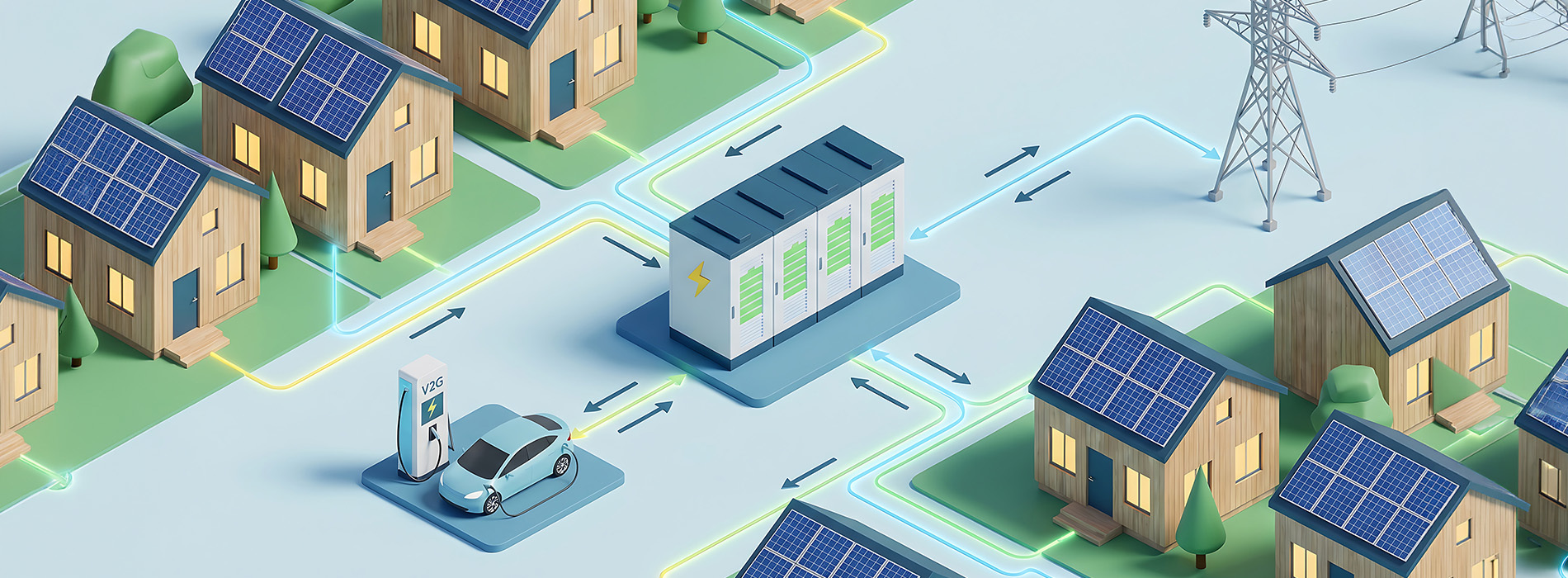
The U.S. has about 6 million light-duty plug-in electric vehicles (EVs) on the road. Yet personal vehicles spend as much as 95% of the day parked, according to the U.S Department of Energy.
That's a missed opportunity.
As more parked vehicles become electric, their batteries represent an untapped energy resource. In California alone, EV batteries represent about 18.5 gigawatts of potential power capacity—more than the state's existing grid-scale battery storage capacity.
The challenge is turning those parked vehicles into a flexible resource the grid can actually use.
How does vehicle-grid integration work?
Vehicle-grid integration (VGI) uses technology and programs to manage when, where and how EVs charge and, in some cases, allows them to send electricity back to homes, buildings or the grid. VGI can shift charging away from peak evening hours when electricity demand is highest. In more advanced applications, it can allow EV batteries to send power back to provide valuable energy services.
With proper planning, VGI can help states and utilities reduce peak demand, make better use of clean electricity, defer costly distribution grid upgrades and create new value for EV drivers and fleet operators. But getting there will require practical program design, clearer rules, better customer incentives and a more coordinated market.
A big opportunity still in the early stages
Managed charging, sometimes called smart charging, controls the timing of EV charging while power flows in one direction: from the grid to the vehicle. It is the most common form of VGI today and can shift charging to times when electricity is cheaper, cleaner or less stressful for the grid.
Bidirectional charging, sometimes called vehicle-to-grid (V2G) or vehicle-to-everything (V2X), allows electricity to move both ways. Depending on the application, an EV can send power back to the grid, a home, a building or an individual device. V2G has greater potential to provide grid services and generate revenue for EV owners, but it is also more complicated to deploy.
The market remains young. As of May 2026, about 40 EV models offered some form of bidirectional capability, while only a handful supported full vehicle-to-grid applications. Bidirectional residential chargers are also limited, and some automakers have scaled back investment in V2X-capable vehicles and charging equipment.
At this stage, government and utility pilots and incentive programs are critical in determining whether VGI becomes a niche technology or a scalable clean energy resource.
What early VGI programs are teaching us
California is one of the most active vehicle-grid integration test beds, with state and utility programs exploring both managed and bidirectional charging. The California Energy Commission’s Responsive Easy-Charging Products and Dynamic Signals (REDWDS) program has enrolled more than 20,000 residential EV customers to shift charging away from peak hours, showing that many drivers are willing to adjust charging habits when programs and technology are simple and incentives are clear.
Utilities are testing different models.
Pacific Gas & Electric has piloted bidirectional charging in residential, commercial and microgrid settings, with commercial fleets appearing especially promising because they often have predictable schedules, larger energy needs, more flexibility in charging patterns, and clearer business cases.
Southern California Edison’s Charge Smart SoCal program has shown that managed charging can help reduce demand during peak periods. Its recently approved Orchestrated Charging and Advanced Resiliency for Distribution (ORCHARD) program will provide multiyear incentives to engage a wider pool of customers in managed charging. Notably, the California Public Utilities Commission approved the managed charging incentives but not the incentives for bidirectional chargers, due to confusion of whether the chargers would be used solely for backup power.
Utilities, automakers and technology providers are piloting residential V2G programs in Maryland, a leader in V2G interconnection rules. Bidirectional pilots are underway for Kia EV9 owners in California and Connecticut and GM drivers in California and Michigan. At least 26 utilities in 19 states are testing V2G with school buses, which have predictable schedules and are mostly idle in the summer, sending electricity back to the grid.
One lesson is already clear. Managed charging is proving easier to scale. Bidirectional charging may ultimately deliver greater value, but it also requires overcoming higher costs, more complicated interconnection requirements, confusion among use cases, and less certain compensation for customers.
What are the barriers to VGI?
For VGI to become a mainstream grid resource, states and utilities need to address three practical barriers: upfront costs, complex interconnection and limited compensation mechanisms.
1. Bidirectional charging equipment remains expensive.
According to the California Energy Commission, costs of residential bidirectional chargers can exceed $10,000 when accounting for associated equipment such as inverters and transfer switches. Costs can go up $1,500-$4,000 if an electrical panel upgrade is needed.
Incentive programs can help make early bidirectional charging installations more affordable, especially when paired with support for electrical panel upgrades.
Funding for these incentives can come from more states authorizing utilities’ ratepayer-funded transportation electrification programs or enacting a Low Carbon Fuel Standard (LCFS). Authorizing LCFS funds to be used for bidirectional charging programs can create an ongoing market-based revenue source tied to the use of cleaner transportation fuels.
2. Current processes were not designed for mobile, intermittently connected batteries.
Existing interconnection rules were developed for stationary energy resources such as rooftop solar, not mobile batteries that connect to the grid intermittently. As a result, utilities often rely on case-by-case reviews, and requirements vary depending on whether a system exports power to the grid (grid-parallel) or only serves local loads (grid-isolated).
Standardized interconnection processes and timelines are needed, and there should be separate pathways for grid-parallel and grid-isolated systems.
3. Without a standardized way for customers to earn predictable revenue from sending electricity back to the grid, it’s hard for households, fleets, aggregators and lenders to understand the value of V2G investments.
Unlike rooftop solar, there is still no standardized way to compensate EV owners for sending electricity back to the grid because V2G systems can respond dynamically to real-time price signals.
A first step would be to gather more data, both by expanding pilots and requiring utilities to regularly update maps that identify distribution grid capacity. This data would help uncover where vehicle-grid integration delivers the greatest value, since benefits vary by location, use case, utility territory and charging behavior.
Third-party aggregators may offer a practical bridge by coordinating groups of vehicles, participating in energy or grid services markets and sharing revenue with customers while broader compensation rules are developing. For example, Tesla’s Powershare Grid Support program in Texas already aggregates Cybertrucks, participates in ancillary services markets and shares a portion of the resulting revenue with vehicle owners.
From pilot projects to grid resource
Vehicle-grid integration is following a familiar path. Rooftop solar, battery storage and public EV charging all faced high costs, evolving regulations and uncertain business models before becoming mainstream.
As EV adoption continues to grow, so does the opportunity to use millions of parked vehicles as a flexible grid resource while creating new value for EV owners. The challenge is creating the policies, market structures and customer incentives needed to put them to work.

Kinshuk Chatterjee
Senior Transportation Policy Analyst
Kinshuk Chatterjee is a Senior Transportation Policy Analyst with eight years of experience in the clean energy sector. Kinshuk coordinates CSE’s regulatory engagement on key transportation electrification initiatives regarding electric vehicles, EV infrastructure and fleet electrification. Prior…
Read more by Kinshuk Chatterjee